


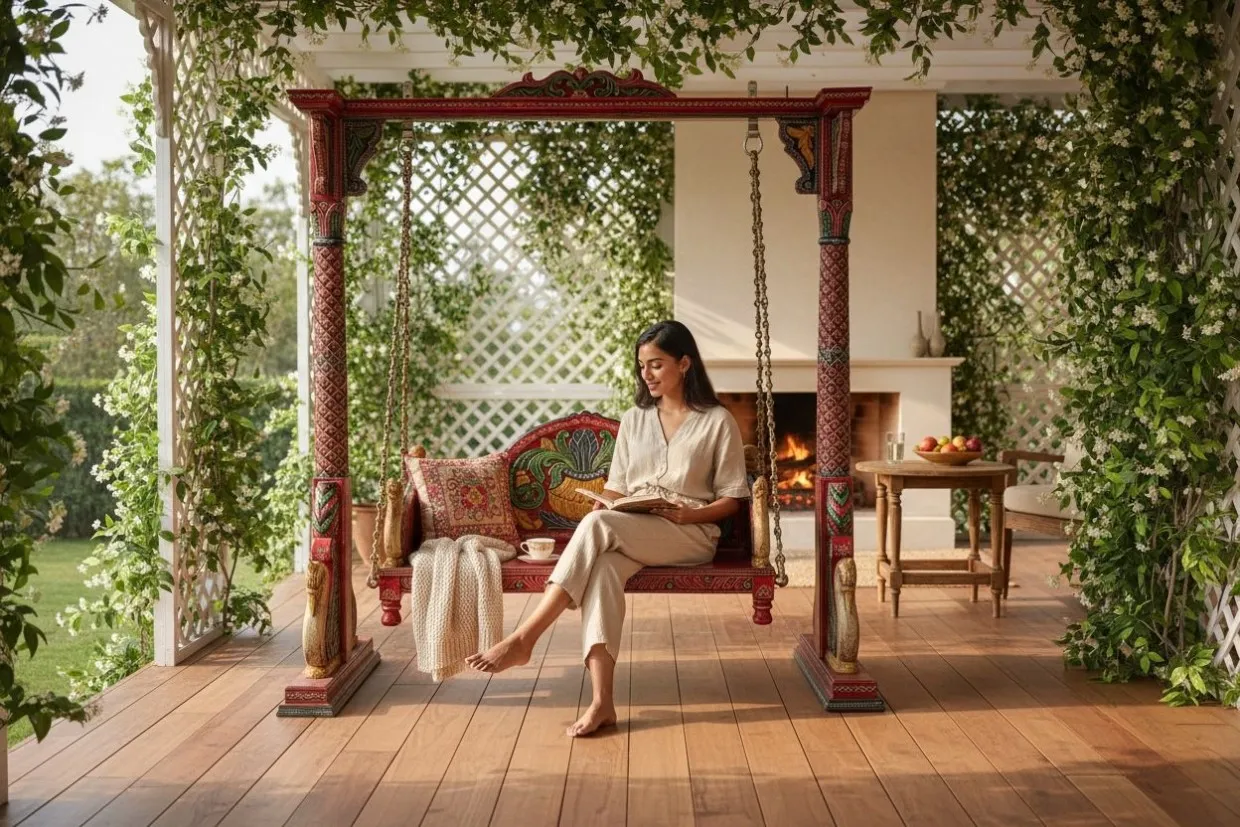
A jhula is more than a seat suspended by chains — it is a living chapter of Indian artistry. Every carved curve, every gleaming brass link, and every rhythmic sway tells a story that began in royal courtyards centuries ago. At Purana Darwaza, each jhula is a tribute to this enduring craft — an art that our artisans have preserved through generations of skill, patience, and devotion.
This is the story behind how our swings are made, and the people who keep their legacy alive.
1. A Tradition Rooted in Royal India
In ancient India, jhulas were symbols of leisure and prestige. Kings and queens relaxed on intricately carved wooden swings suspended in marble courtyards, surrounded by musicians and soft breeze. These swings weren’t just furniture — they were status, artistry, and emotion.
Our Tara Hand-Carved Exquisite Wooden Swing draws from these very royal traditions. Its temple-style carvings, lotus motifs, and gently curved armrests are inspired by 17th-century Rajasthani architecture — a reminder of the golden age of handcrafting.
Why it endures:
Because each design is a reflection of India’s cultural memory, passed down through master artisans who still carve by hand, just as their ancestors did.
2. The Journey Begins with Teak
Every Purana Darwaza jhula begins in the wood yard — where artisans hand-select seasoned teak for its dense grain, rich colour, and natural oil content. Teak is chosen not just for strength but for its ability to age beautifully.
The Carved Teak Wood Reversible Jhula Swing, for example, is made entirely from this resilient timber. Each piece of wood is inspected for consistency before carving begins — ensuring that the final jhula can last for decades without warping or losing balance.
Why it endures: Teak’s natural oils act as a shield against time and weather, making it a material that matures gracefully, rather than deteriorates.
3. Carving: The Art of Patience and Precision
The carving process is where the jhula truly comes to life. Using chisels, mallets, and sheer artistry, craftsmen shape floral vines, temple borders, and geometric latticework into the wood — entirely by hand.
Our artisans in Jodhpur spend weeks perfecting details on each piece. The Smeera Carved Teak Wood Jhula Swing with Brass Chain, for instance, features fine carving along its columns, each petal and curve etched with remarkable depth.
Why it endures:
Because no machine can replicate the subtle imperfections that make hand-carved furniture human. The small variations in each line are what make every jhula one of a kind.
4. Forging the Brass Chains: A Heritage of Strength and Shine
A jhula’s elegance also hangs — quite literally — by its chains. The brass used in Purana Darwaza swings is hand-cast by local metalworkers using age-old techniques. Each chain is heated, shaped, and polished by hand to ensure both durability and beauty.
The Teakwood Haven – The Brass Serenity Swing showcases this balance of material mastery. The brass complements the teak frame, creating a visual harmony that glows under natural light.
Why it endures:
Because it is built by craftsmen who treat metal not as hardware, but as jewelry for wood — each link perfectly weighted and forged to last generations.
5. Polishing and Finishing: Where Colour Meets Character
After carving and assembly, the jhula undergoes layers of hand-polishing using natural waxes and oil-based finishes. This process enhances teak’s natural grain while protecting it from humidity.
On pieces like the Wood and Brass Jhula Swing, the finish brings out a subtle dual-tone contrast — the deep brown of teak and the mellow glow of brass. The goal isn’t perfection but character — a surface that feels alive and tactile.
Why it endures:
Because true craftsmanship values depth over gloss. Each polished layer adds not just sheen, but soul.
6. The Final Assembly: Harmony in Motion
Once the frame, seat, and chains are complete, the final stage is balance testing. The swing is assembled, adjusted for even weight distribution, and tested for smooth motion. The seating is designed to provide both comfort and structural integrity — a detail that distinguishes handcrafted jhulas from mass-produced ones.
The Indian Wooden Jhula with Brass Chains represents this harmony perfectly — every element, from the wood joinery to the ceiling hooks, calibrated for precision and elegance.
Why it endures:
Because balance isn’t just physical; it’s aesthetic. When a jhula sways silently and evenly, it carries the signature of a master craftsman.
7. A Craft Sustained by Generations
Every Purana Darwaza jhula passes through many hands before it reaches your home — woodworkers, carvers, metal forgers, polishers, and finishers. Each artisan contributes their expertise and their story, continuing a legacy that stretches back centuries.
In our Jodhpur workshop, fathers train sons, and masters mentor apprentices — preserving not only the technique but the philosophy behind it. A philosophy of patience, devotion, and respect for material.
Why it endures:
Because these artisans don’t build furniture for trends; they build it for time. Every swing they create is an offering — a balance of human skill and natural beauty.
The Purana Darwaza Promise
When you choose a jhula from Purana Darwaza, you bring home more than design — you bring home a lineage of craftsmanship. Each swing, from the intricate Tara to the minimalist Teakwood Haven, carries the dedication of artisans who pour weeks of work and generations of tradition into every detail.
Our mission is to ensure that this craft never fades — that Indian homes, whether old or new, continue to sway with the rhythm of heritage.