


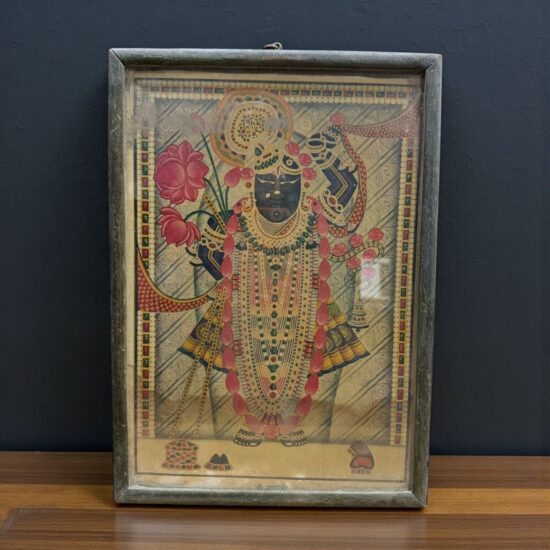
This authentic vintage Shrinathji oleograph, dating to approximately 80 years old, is a devotional art print depicting Shrinathji, the child form of Lord Krishna worshipped primarily in the Pushtimarg tradition. Oleographs of this period played a vital role in bringing temple imagery into private homes and were produced with far greater care and material quality than modern decorative prints.
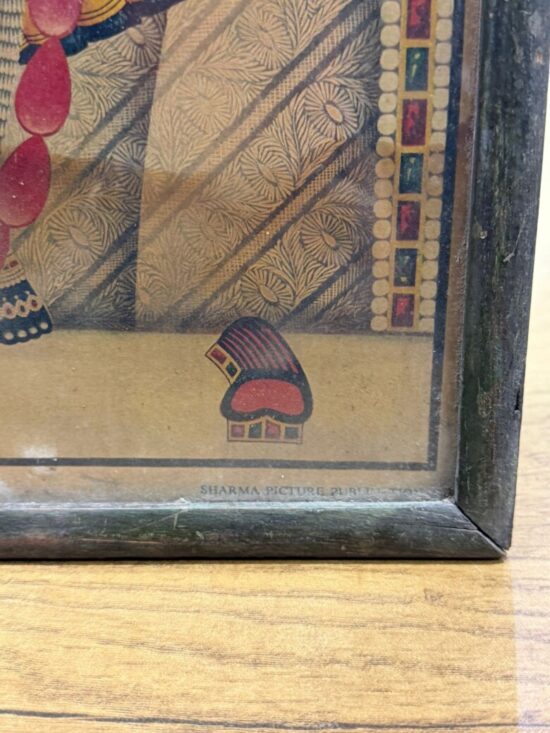
The artwork features rich, layered coloration, intricate ornamentation, and strong iconography. Over decades, the surface has developed gentle toning that enhances its visual depth and historical character. The piece remains housed in its original vintage wooden frame, adding further authenticity and display value.
Most oleographs from this era were exposed to humidity, sunlight, and ritual handling, and very few survive intact. Finding an original Shrinathji oleograph of this age in presentable condition is increasingly difficult, particularly in a display-ready framed format.
This is not a modern reproduction. It is a true vintage devotional artwork, preserved from a period that defined Indian religious print culture.
Perfect For
Shrinathji and Krishna devotees
Collectors of Indian devotional art
Meditation and prayer rooms
Heritage and boho interior styling
Gallery walls and curated spaces
Meaningful antique gift buyers
Suitable for display as framed wall art or inclusion in a devotional or cultural collection.
Item Details
Subject: Shrinathji
Type: Original vintage oleograph
Origin: India
Age: Approx. 80 years old
Frame: Original vintage wooden frame
Size (Approximate):
10.5 x 14 inches
Condition:
Good vintage condition with age-related toning, light surface wear, and marks consistent with authentic early oleographs. Frame shows honest age. Please review photos carefully.
One of a kind example.
Not a modern print.
Not digitally reproduced.
Only one available. Once sold, no identical replacement is possible.
Why This Piece Is Truly Scarce
Original period devotional oleograph
Shrinathji subject with strong collector demand
Original frame retained
Early print quality not seen in modern reproductions
Surviving examples increasingly difficult to source
Comparable pieces are now primarily found in private collections and temple archives.


